Reading time: 7 minutes
Yes. PPWR B2B packaging is covered the same way consumer-facing packaging is: there is no general exemption. Treating industrial or transport packaging as outside the regulation’s scope is a compliance gap.
However, a handful of specific rules work differently in B2B contexts, including one that is stricter than the general standard. This post covers both: where B2B context changes something, and where it does not.
Where B2B Context Actually Changes the Rules
Re-use Mandates: 100% Target for B2B & Intra-Company Logistics
While general transport packaging faces a 40% re-use target by 2030 (and an endeavor of 70% by 2040), B2B supply chains are held to a much stricter standard. Under Article 29(2) and (3), starting January 1st 2030, transport packaging moved between a company’s own sites, between linked/partner enterprises, or delivered to another business within the same EU Member State must be 100% reusable within a re-use system. This covers pallets, crates, drums, IBCs, pails, and canisters.
Exemptions: Cardboard boxes, dangerous goods packaging, custom machinery packaging, and flexible formats in direct contact with food/feed are excluded from this 100% re-use mandate.
New B2B Logistics Bans via the Single-Use Plastics Directive (SUPD)
Most single-use plastic bans historically targeted consumer items like straws and cutlery. However, Article 67 of the PPWR explicitly amends the 2019 Single-Use Plastics Directive (SUPD) to add three logistics-focused formats to the EU-wide ban list, effective January 1st 2030:
- Polystyrene and plastic loose-fill chips (“packing peanuts”) used during transport
- Shrink wrap used for luggage protection at airports and train stations
- Multi-pack plastic rings used as grouped packaging
Simplified Labeling: B2B Transport Packaging Is Exempt from Sorting Labels
By the end of 2028, PPWR introduces a mandatory harmonized material sorting label (pictograms showing material composition) for consumer packaging.
The B2B Exemption: Under Article 12(1), transport packaging used purely in B2B logistics is fully exempt from this sorting label, as B2B waste does not enter municipal consumer waste bins (e-commerce packaging is the sole exception).
Reusable Packaging Data Carriers: For reusable transport packaging, reusability QR codes become mandatory on February 12th 2029 under Article 12(2). However, for closed-loop B2B systems, Article 12(5) allows operators to provide this traceability and re-use data via digital portals or accompanying shipping documentation rather than requiring physical printing on every pallet or crate.
Grouped Packaging Bans Exclude Industrial Logistics
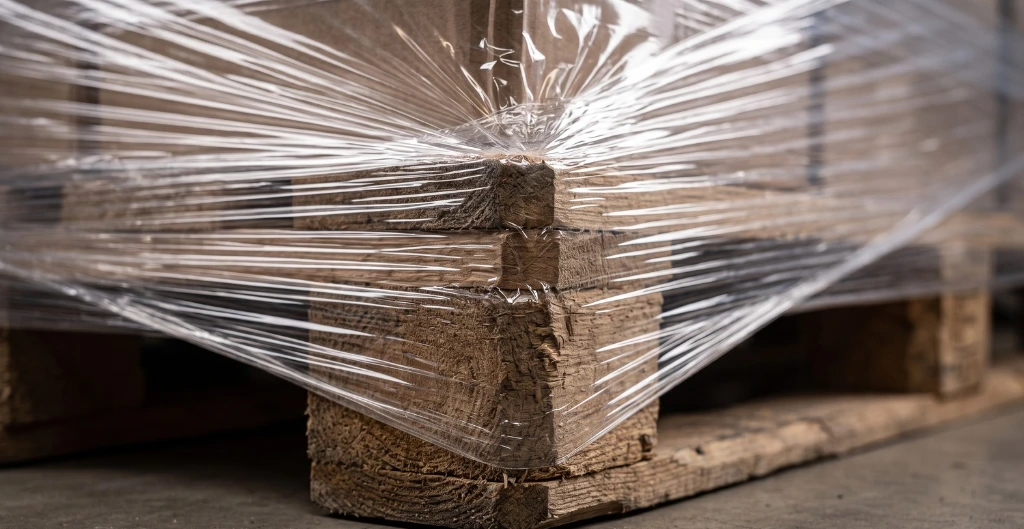
Starting January 1st 2030, Annex V (Point 1) bans single-use plastic grouped packaging – such as collation films and shrink wrap used at the retail point of sale to bundle multiple cans or bottles together. However, this restriction contains an explicit B2B carve-out: shrink wrap and collation films used strictly in industrial distribution to facilitate handling between businesses are not covered by this Annex V restriction.
How B2B “End Users” and Logistics Handlers Shift Producer Liability (EPR)
Under PPWR, Extended Producer Responsibility (EPR) compliance depends on who is classified as the “producer” placing packaging on the market in a Member State. In a B2B transaction, a professional buyer is only treated as the “end user” if they consume the packaged product in their own operations without reselling it. If an intermediate actor – such as a third-party logistics provider (3PL) or distributor – unpacks or repacks shipments, it is not treated as an end user. Article 3(1)(15)(e) classifies the unpacking 3PL or distributor as the producer for that packaging, either removed or added, unless an upstream party is already registered as the producer in that Member State. This makes them directly liable for local EPR registration, fees, and annual tonnage reporting.
What Doesn’t Change for B2B Packaging
A few of PPWR’s core requirements apply identically regardless of whether the packaging ever reaches a consumer:
- The empty space ratio. The 50% maximum empty space cap for grouped, transport, and e-commerce packaging applies to B2B shipments exactly as it applies to anything else.
- Substance restrictions. The PFAS and heavy metal limits apply to packaging regardless of who the final recipient is.
- Declaration of Conformity and technical documentation obligations. Every packaging type needs one, B2B or not, and separate technical documentation and declarations are required for distinct transport items, pallets, collars, wraps, and straps alike. We cover what that requires in full in our complete guide to the PPWR Declaration of Conformity.
Transport and Industrial Packaging: Where B2B Gets the Most Attention
Most packaging used exclusively in B2B contexts, and the bulk of what counts as PPWR B2B packaging in practice, falls under PPWR’s transport packaging category: pallets, crates, drums, stretch film, and strapping. The party that counts as manufacturer for a pallet is not always the party that counts as manufacturer for the stretch film wrapped around it. We cover this in depth in our post on PPWR transport packaging.
What This Means for Your Operations
Do not assume B2B-only packaging sits outside PPWR’s scope, or that the rules that apply are the lighter-touch version. The 100% re-use mandate for intra-company and same-Member-State transport is stricter than the general target, not more lenient.
Map your B2B packaging by format, material, and role, the same way you would consumer-facing packaging. For every transport packaging format moved between your own sites or to another business within the same Member State, confirm whether it falls under the 100% re-use requirement or one of the specific exemptions. Check your protective and logistics packaging, loose-fill chips and shrink wrap in particular, against the Article 67 bans. And confirm who counts as the manufacturer for each component.
Frequently Asked Questions
Does PPWR apply to B2B packaging?
Yes. PPWR applies to packaging placed on the EU market regardless of whether it is used in a B2B or B2C context. There is no general B2B exemption.
Is there a stricter re-use requirement for B2B transport packaging?
Yes. Transport packaging moved between a company’s own sites, between linked or partner enterprises, or delivered to another economic operator within the same Member State must be 100% reusable within a re-use system, compared to the general 40% target, with specific exemptions including pallet wrappings and straps.
Are there PPWR bans that specifically target B2B or logistics packaging?
Yes. Article 67 adds bans on luggage shrink wrap used at airports and train stations, polystyrene loose-fill chips used to protect goods in transit, and multi-pack plastic rings used as grouped packaging.
Does the PPWR empty space ratio apply to B2B shipments?
Yes. The 50% maximum empty space cap for grouped, transport, and e-commerce packaging applies the same way regardless of B2B or B2C context.
Is a logistics company considered a producer under PPWR?
Logistics and third-party logistics providers that unpack, repack, or divide shipments are not considered end users, which means they are classified as producers for the transport packaging they handle.
How PAQR Can Help
PPWR requires the same documentation for B2B and transport packaging as for consumer packaging. PAQR helps you collect the data for each packaging format, check how ready your technical documentation is, and generate the Declaration of Conformity. You can share the DoC with partners and download it in all 24 official EU languages.
Click “Try now for free” to start a free trial: