
Packaging Compliance
For Every PPWR Milestone
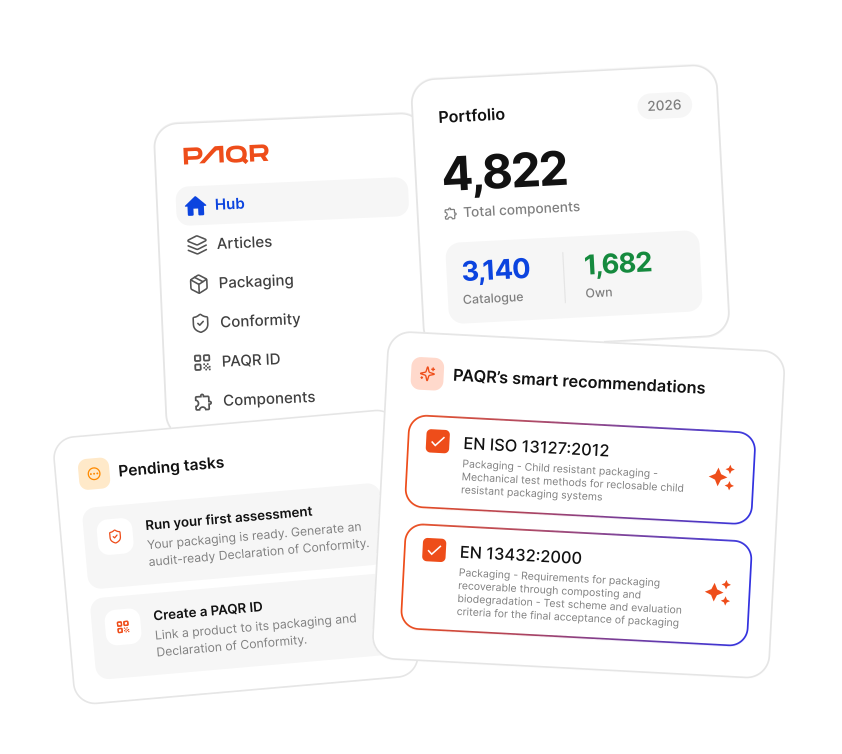
PAQR is a packaging and supplier data management platform, purpose-built for PPWR by industry experts. Designed to get teams of all sizes audit-ready, with plans starting at €49 per month.
Packaging Compliance
For Every PPWR Milestone
PAQR is a packaging and supplier data management platform, purpose-built for PPWR by industry experts. Designed to get teams of all sizes audit-ready, with plans starting at €49 per month.
Packaging Compliance
For Every PPWR Milestone
PAQR is a packaging and supplier data management platform, purpose-built for PPWR by industry experts. Designed to get teams of all sizes audit-ready, with plans starting at €49 per month.

Not sure if PPWR applies to you, or what your obligations are?
Answer a few quick questions to find your role(s) and get a clear picture of what it means for your business. No email required to see your results.
Not sure if PPWR applies to you, or what your obligations are?
Answer a few quick questions to find your role(s) and get a clear picture of what it means for your business. No email required to see your results.
Not sure if PPWR applies to you, or what your obligations are?
Answer a few quick questions to find your role(s) and get a clear picture of what it means for your business. No email required to see your results.
PPWR: The EU Packaging and Packaging Waste Regulation
The EU Packaging and Packaging Waste Regulation sets binding compliance requirements for packaging placed on the European Single Market. It mandates recyclability requirements and strict recycled content thresholds by 2030.

Declaration of Conformity (DoC)
A Declaration of Conformity must be issued before any packaged product is placed on the market. This document confirms compliance with applicable regulatory and technical requirements after conducting a conformity assessment.

Design for Recycling (DfR)
Packaging must be categorized into performance grades (A, B, C). Packaging not reaching these performance levels will be seen as technically non-recyclable and prohibited from entering the market entirely.

Packaging Reduction
Packaging weight and volume must be minimized to what is strictly necessary to ensure functionality. Excess “air space” is now considered a liability.

Extended Producer Responsibility (EPR)
Manufacturers now bear full financial responsibility for the entire lifecycle of their packaging. From collection to final recycling processes.

Bio-based and Compostable Standards
New criteria establish strict certification requirements for compostable packaging, ensuring that it breaks down in industrial composting environments without contaminating waste streams.

PPWR PFAS and Chemical Safety
Stricter oversight on “forever chemicals” in food packaging ensures consumer safety and material purity for high-quality recycled feedstocks.
PPWR: The EU Packaging and Packaging Waste Regulation
The EU Packaging and Packaging Waste Regulation sets binding compliance requirements for packaging placed on the European Single Market. It mandates recyclability requirements and strict recycled content thresholds by 2030.
Declaration of Conformity (DoC)
A Declaration of Conformity must be issued before any packaged product is placed on the market. This document confirms compliance with applicable regulatory and technical requirements after conducting a conformity assessment.
Design for Recycling (DfR)
Packaging must be categorized into performance grades (A, B, C). Packaging not reaching these performance levels will be seen as technically non-recyclable and prohibited from entering the market entirely.
Packaging Reduction
Packaging weight and volume must be minimized to what is strictly necessary to ensure functionality. Excess “air space” is now considered a liability.
Extended Producer Responsibility (EPR)
Manufacturers now bear full financial responsibility for the entire lifecycle of their packaging. From collection to final recycling processes.
Bio-based and Compostable Standards
New criteria establish strict certification requirements for compostable packaging, ensuring that it breaks down in industrial composting environments without contaminating waste streams.
PPWR PFAS and Chemical Safety
Stricter oversight on “forever chemicals” in food packaging ensures consumer safety and material purity for high-quality recycled feedstocks.
PPWR: The EU Packaging and Packaging Waste Regulation
The EU Packaging and Packaging Waste Regulation sets binding compliance requirements for packaging placed on the European Single Market. It mandates recyclability requirements and strict recycled content thresholds by 2030.
Declaration of Conformity (DoC)
A Declaration of Conformity must be issued before any packaged product is placed on the market. This document confirms compliance with applicable regulatory and technical requirements after conducting a conformity assessment.
Design for
Recycling (DfR)
Packaging must be categorized into performance grades (A, B, C). Packaging not reaching these performance levels will be seen as technically non-recyclable and prohibited from entering the market entirely.
Packaging
Reduction
Packaging weight and volume must be minimized to what is strictly necessary to ensure functionality. Excess “air space” is now considered a liability.
Extended Producer Responsibility (EPR)
Manufacturers now bear full financial responsibility for the entire lifecycle of their packaging. From collection to final recycling processes.
Bio-based and Compostable Standards
New criteria establish strict certification requirements for compostable packaging, ensuring that it breaks down in industrial composting environments without contaminating waste streams.
PPWR PFAS and Chemical Safety
Stricter oversight on “forever chemicals” in food packaging ensures consumer safety and material purity for high-quality recycled feedstocks.


Your Packaging Compliance, Sorted.
PPWR applies to businesses across the EU market, regardless of size. If you place packaged goods on the EU market, you need a Declaration of Conformity for your packaging by August 12, 2026.
PAQR guides you through the process. Map your packaging components, request missing data from your suppliers directly through the platform, and generate an audit-ready Declaration of Conformity in one click.
One workspace for all of your packaging data, organized and ready to present when the time comes.

Packaging Compliance, Built for Scale.
Managing packaging compliance across dozens of suppliers, multiple product lines, and PPWR milestones stretching to 2040 requires structured, dependable data.
PAQR centralizes your packaging components, supporting documentation (material declarations, technical specifications, supplier certificates), and compliance records in one auditable workspace. Request missing data from suppliers through a secure portal, generate Declarations of Conformity across your full portfolio, and keep your records current as components change.
Set up PAQR to match the way your organization works, whether across multiple brands or multiple legal entities. One system your whole team can rely on.

One upload. Ready for every customer.
As PPWR compliance takes effect, your customers are sending more data requests than ever. Material declarations, PFAS test results, technical specifications, recycled content data. Each customer wants it in their format, on their timeline, and the same request comes in from ten different directions.
PAQR gives you a structured home for your component catalog. Upload your technical specifications, compliance documentation, and material declarations once. When a customer makes a data request through the platform, the information is already there, organized and ready to share.
Keep your catalog current in one place. When a component changes, update it once and connected customers have access to the latest version, with no follow-up emails required.



Your Packaging Compliance, Sorted.
PPWR applies to businesses across the EU market, regardless of size. If you place packaged goods on the EU market, you need a Declaration of Conformity for your packaging by August 12, 2026.
PAQR guides you through the process. Map your packaging components, request missing data from your suppliers directly through the platform, and generate an audit-ready Declaration of Conformity in one click.
One workspace for all of your packaging data, organized and ready to present when the time comes.
Packaging Compliance, Built for Scale.
Managing packaging compliance across dozens of suppliers, multiple product lines, and PPWR milestones stretching to 2040 requires structured, dependable data.
PAQR centralizes your packaging components, supporting documentation (material declarations, technical specifications, supplier certificates), and compliance records in one auditable workspace. Request missing data from suppliers through a secure portal, generate Declarations of Conformity across your full portfolio, and keep your records current as components change.
Set up PAQR to match the way your organization works, whether across multiple brands or multiple legal entities. One system your whole team can rely on.
One upload. Ready for every customer.
As PPWR compliance takes effect, your customers are sending more data requests than ever. Material declarations, PFAS test results, technical specifications, recycled content data. Each customer wants it in their format, on their timeline, and the same request comes in from ten different directions.
PAQR gives you a structured home for your component catalog. Upload your technical specifications, compliance documentation, and material declarations once. When a customer makes a data request through the platform, the information is already there, organized and ready to share.
Keep your catalog current in one place. When a component changes, update it once and connected customers have access to the latest version, with no follow-up emails required..
Your Packaging Compliance, Sorted.
PPWR applies to businesses across the EU market, regardless of size. If you place packaged goods on the EU market, you need a Declaration of Conformity for your packaging by August 12, 2026.
PAQR guides you through the process. Map your packaging components, request missing data from your suppliers directly through the platform, and generate an audit-ready Declaration of Conformity in one click.
One workspace for all of your packaging data, organized and ready to present when the time comes.
Packaging Compliance, Built for Scale.
Managing packaging compliance across dozens of suppliers, multiple product lines, and PPWR milestones stretching to 2040 requires structured, dependable data.
PAQR centralizes your packaging components, supporting documentation (material declarations, technical specifications, supplier certificates), and compliance records in one auditable workspace. Request missing data from suppliers through a secure portal, generate Declarations of Conformity across your full portfolio, and keep your records current as components change.
Set up PAQR to match the way your organization works, whether across multiple brands or multiple legal entities. One system your whole team can rely on.
One upload. Ready for every customer.
As PPWR compliance takes effect, your customers are sending more data requests than ever. Material declarations, PFAS test results, technical specifications, recycled content data. Each customer wants it in their format, on their timeline, and the same request comes in from ten different directions.
PAQR gives you a structured home for your component catalog. Upload your technical specifications, compliance documentation, and material declarations once. When a customer makes a data request through the platform, the information is already there, organized and ready to share.
Keep your catalog current in one place. When a component changes, update it once and connected customers have access to the latest version, with no follow-up emails required..
PPWR Timeline: Key Compliance Milestones for EU Packaging
Meet Deadlines. Avoid Market Bans. Avoid Fines.
PPWR Timeline: Key Compliance Milestones for EU Packaging
Meet Deadlines. Avoid Market Bans. Avoid Fines.
PPWR Timeline: Key Compliance Milestones for EU Packaging
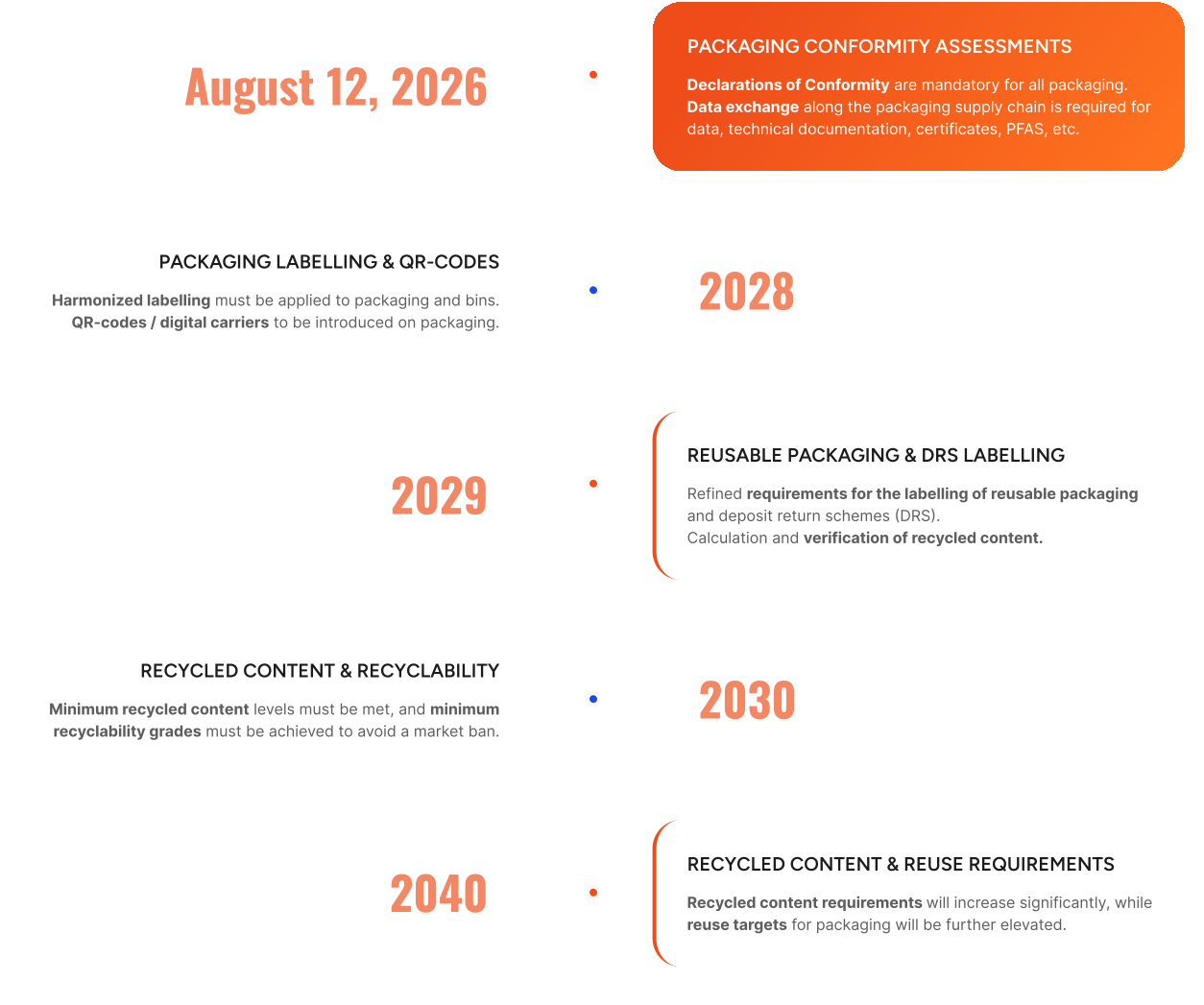
August 12, 2026
PACKAGING CONFORMITY
ASSEsSMENTS
Declarations of Conformity are mandatory for all packaging. Data exchange along the packaging supply chain is required for data, technical documentation, certificates, PFAS, etc.
2028
Packaging Labelling & QR-CODES
Harmonized labelling must be applied to packaging and bins. QR-codes / digital carriers to be introduced on packaging.
2029
Reusable Packaging & DRS Labelling
Refined requirements for the labelling of reusable packaging and deposit return schemes (DRS). Calculation and verification of recycled content.
2030
Recycled Content & Recyclability
Minimum recycled content levels must be met, and minimum recyclability grades must be achieved to avoid a market ban.
2040
Recycled Content & Reuse Requirements
Recycled content requirements will increase significantly, while reuse targets for packaging will be further elevated.
Meet Deadlines. Avoid Market Bans. Avoid Fines.
From Data To Declaration
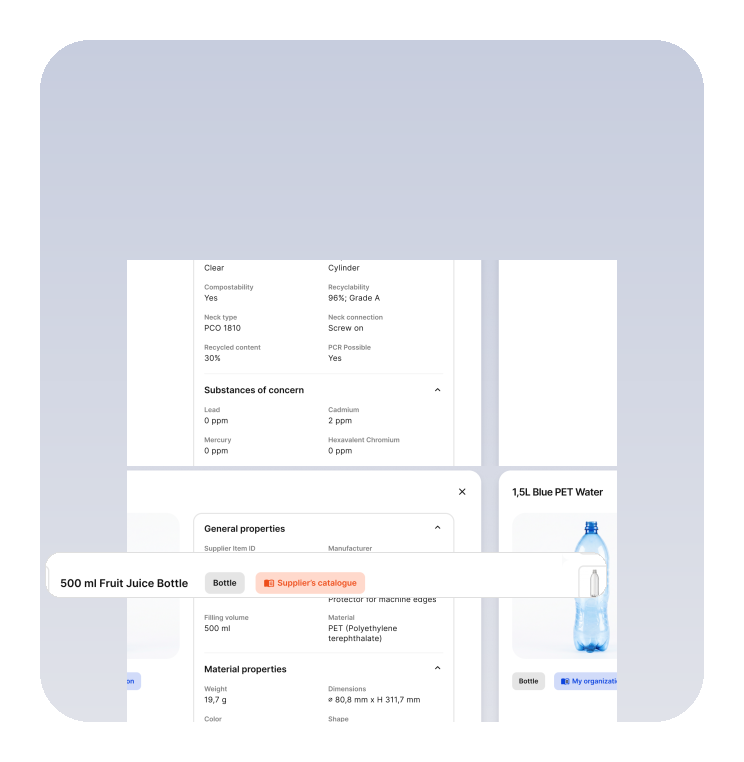
Integrated Supplier Catalogs of Packaging Components
Instantly access and import packaging components directly from your connected suppliers’ databases.
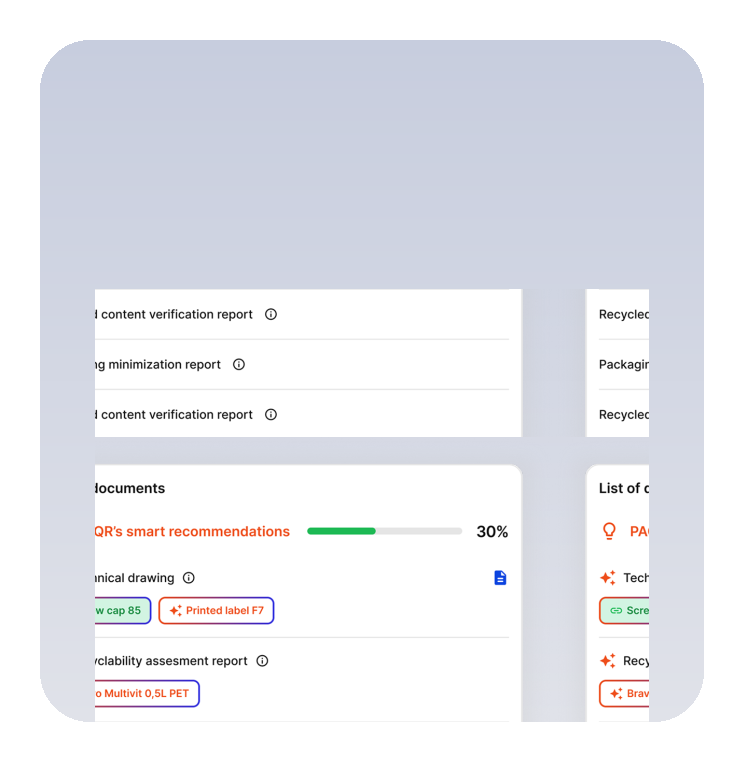
PAQR AI: Document Recommendations
Eliminate the guesswork from compliance by letting our AI engine automatically identify exactly which documents your packaging needs.
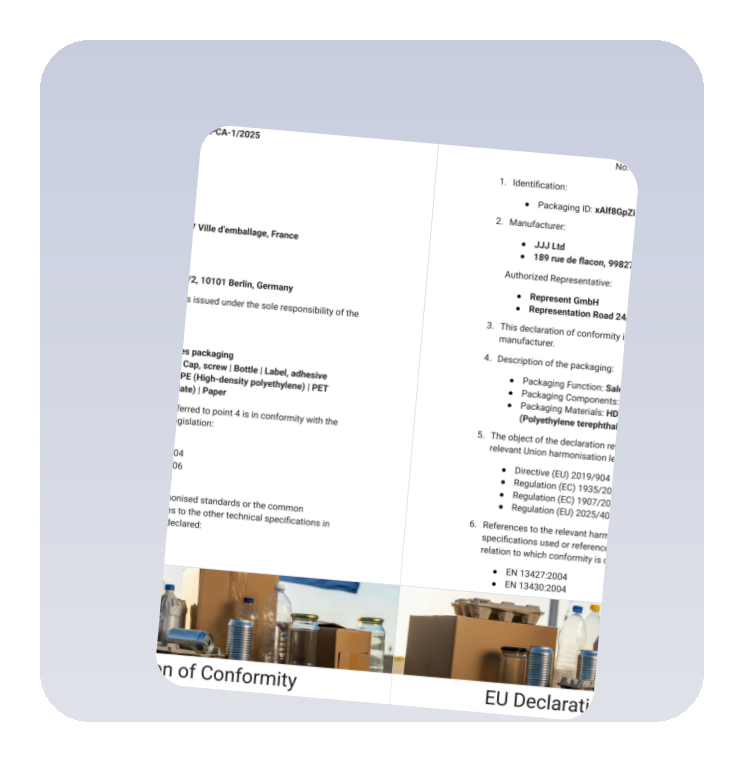
Automated Assessment & DoC Generation
Transform your packaging data into a legally sound PPWR Declaration of Conformity (DoC) and share it with a single click.
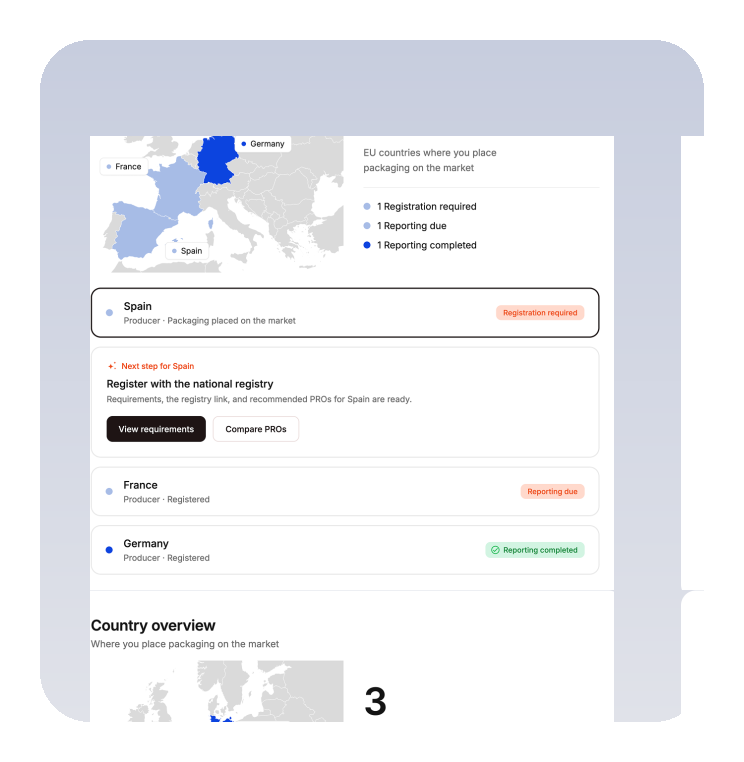
EPR Registration & Reporting Assistance
PAQR tracks your Producer status in every Member State, flags where EPR registration may be required, and guides you through registering and reporting.
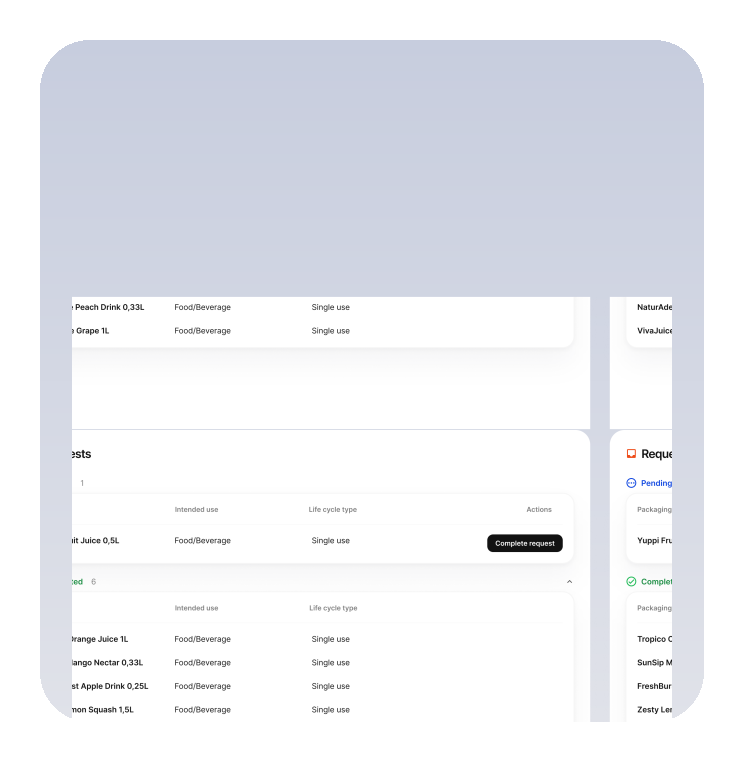
Easy Contact via Supplier Request Portal
Effortlessly harvest missing technical specifications and compliance documents directly from your supplier network through a secure, dedicated portal.
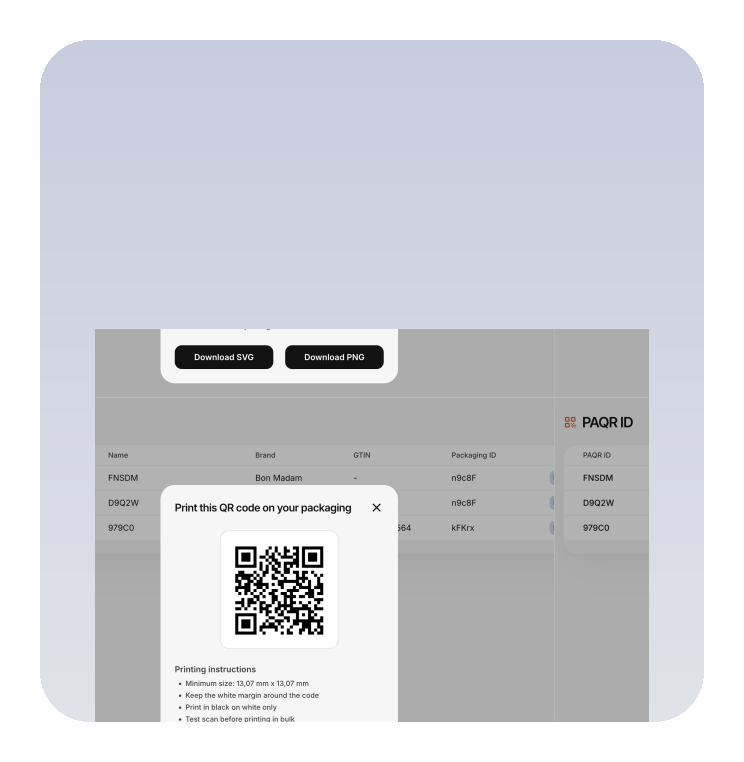
Dynamic QR Code Generation
PAQR automatically generates the compliant QR codes and hosts the digital records required under the PPWR, ready to print on your packaging without separate web infrastructure.

From Data To Declaration
Integrated Supplier Catalogs of Packaging Components
Instantly access and import packaging components directly from your connected suppliers’ databases.
PAQR AI: Document Recommendations
Eliminate the guesswork from compliance by letting our AI engine automatically identify exactly which documents your packaging needs.
Automated Assessment & DoC Generation
Transform your packaging data into a legally sound PPWR Declaration of Conformity (DoC) and share it with a single click.
EPR Registration & Reporting Assistance
PAQR tracks your Producer status in every Member State, flags where EPR registration may be required, and guides you through registering and reporting.
Easy Contact via Supplier Request Portal
Effortlessly harvest missing technical specifications and compliance documents directly from your supplier network through a secure, dedicated portal.
Dynamic QR Code Generation
PAQR automatically generates the compliant QR codes and hosts the digital records required under the PPWR, ready to print on your packaging without separate web infrastructure.
From Data To Declaration
Integrated Supplier Catalogs of Packaging Components
Instantly access and import packaging components directly from your connected suppliers’ databases.
PAQR AI: Document Recommendations
Eliminate the guesswork from compliance by letting our AI engine automatically identify exactly which documents your packaging needs.
Automated Assessment & DoC Generation
Transform your packaging data into a legally sound PPWR Declaration of Conformity (DoC) and share it with a single click.
EPR Registration & Reporting Assistance
PAQR tracks your Producer status in every Member State, flags where EPR registration may be required, and guides you through registering and reporting.
Easy Contact via Supplier Request Portal
Effortlessly harvest missing technical specifications and compliance documents directly from your supplier network through a secure, dedicated portal.
Dynamic QR Code Generation
PAQR automatically generates the compliant QR codes and hosts the digital records required under the PPWR, ready to print on your packaging without separate web infrastructure.
The Compliance Burden Is Scaling
Faster Than Your Team

Fragmented Regulation
Tracking EPR, the Single-Use Packaging Directive, and PPWR compliance requirements manually carries significant liability risk.

Data Silos
Suppliers provide inconsistent specifications in various formats, which, on the one hand, makes it impossible to ensure seamless control and monitoring of compliance and, on the other hand, complicates sustainability reporting.

60%
of compliance teams’ hours are consumed by manual vendor data collection

65%
of compliance tasks are still performed manually

+130%
increase of national packaging and single-use plastics regulation since 2018

70%
of companies underestimate the compliance headcount needs
Frequently
Asked Questions
The Packaging and Packaging Waste Regulation (PPWR) is an EU regulation that replaces the previous Packaging Directive with one set of rules applied directly across all 27 Member States.
Its goal is to reduce packaging waste through mandatory requirements covering recyclability, recycled content, chemical safety, reuse, minimization and labelling. Unlike the previous Directive, which was implemented differently in each country, the PPWR applies uniformly across the EU.
The first major deadline is August 12, 2026. From that date, businesses placing packaging on the EU market must have a Declaration of Conformity and supporting technical documentation in place. New PFAS restrictions for food-contact packaging also take effect on this date.
Additional milestones follow through 2030 (recyclability grades, recycled content targets), 2035 (at-scale recyclability proof), and 2040 (higher targets). The regulation is structured as a phased rollout, not a single deadline.
The PPWR applies to businesses that place packaging on the EU market, regardless of company size. This includes manufacturers, importers, distributors, and brand owners.
There are specific exemptions, including certain medical device packaging. But the general rule is broad: if you sell packaged goods in the EU, you are likely in scope.
Businesses based outside the EU are also affected if they export packaged products into the EU market. In this case, the EU-based importer carries the compliance obligations.
The “manufacturer” is the economic operator legally responsible for ensuring that the packaging complies with all sustainability and labelling requirements (such as recyclability, minimisation, and limits on substances of concern) before it is placed on the EU market.
You are considered the manufacturer if the packaging or packaged product is designed or manufactured under your own name or trademark, even if a third party physically produces it.
Furthermore, if you are an importer or distributor who modifies packaging in a way that affects compliance, or if you place it on the market under your own brand, the regulation also treats you as the manufacturer.
For micro-enterprises, however, the supplier may take on the manufacturer role, provided both parties are located in the same Member State.
Under the PPWR, the “producer” is the entity legally responsible for Extended Producer Responsibility (EPR) obligations, meaning they must register and finance the collection and recycling of packaging waste.
Unlike the manufacturer role, being a producer is strictly territorial.
You are considered the producer if you are the manufacturer, importer, or distributor who makes packaging or packaged goods available for the first time within the territory of a specific EU Member State.
For example, if you import packaged goods from outside the EU or from another Member State and are the first to supply them in that specific country, you assume the producer’s legal duties there.
You are also considered the producer if you unpack packaged products without being the final end user.
Yes. The PPWR covers all packaging placed on the EU market, including transport packaging, grouped packaging, and industrial packaging used exclusively in B2B contexts.
This means pallets, crates, drums, shrink wrap, and other logistics packaging are in scope.
Transport packaging has its own set of reuse targets: 40% reusable by 2030, 70% by 2040. Transport packaging used between sites of the same company or within a single Member State must be 100% reusable, with some easing recently enacted by the EU Commission.
The regulation introduces requirements across several areas:
Chemical safety. PFAS restrictions for food-contact packaging from August 2026. Heavy metals (lead, cadmium, mercury, hexavalent chromium) capped at 100 mg/kg.
Recyclability. By 2030, packaging must achieve a Recyclability Performance Grade of A, B, or C. Anything below C is banned. By 2038, only A and B are allowed.
Recycled content. Mandatory minimums for post-consumer recycled plastic from January 2030: 30% for contact-sensitive PET, 10% for non-PET contact-sensitive, 30% for single-use beverage bottles, 35% for other plastic packaging.
Minimization. Packaging weight and volume must be the minimum necessary. Empty space in transport and e-commerce packaging is capped at 50%.
Reuse. Targets for reusable packaging across transport, beverages, and HORECA sectors, starting 2027-2030.
Labelling. Harmonised pictogram labels by August 2028. QR codes on reusable packaging by February 2029.
Documentation. Declaration of Conformity required before placing packaging on the market. Technical documentation retained for 5 years (single-use) or 10 years (reusable).
From August 12, 2026, food-contact packaging cannot exceed 25 ppb for specific targeted PFAS, 250 ppb for the sum of PFAS, or 50 ppm for total PFASs. If total fluorine exceeds 50 mg/kg, the business must demonstrate the fluorine does not originate from PFAS.
PFAS (per- and polyfluoroalkyl substances) are sometimes called “forever chemicals” because they do not break down in the environment. They are commonly found in coatings, inks, and treated paper used in food packaging.
There is no transitional period for this restriction. Packaging produced after August 12, 2026 must comply. Existing stock already on the market before the deadline is exempt, but new production and new placements must meet the thresholds from day one.
The German Packaging Act (Verpackungsgesetz, VerpackG) is a national law that has governed packaging obligations in Germany. It obliges producers to participate in a Producer Responsibility Organization (PRO, “Dual System”) , register with a Central Packaging Registry (ZSVR/LUCID), and produce regular reporting.
In contrast, the PPWR is an EU-wide regulation that applies directly in all Member States, including Germany. It does not fully replace the VerpackG but introduces a new layer of requirements on top of it.
Key differences: the VerpackG focuses primarily on producer registration and affiliation with PROs within Germany. The PPWR adds EU-wide requirements for recyclability grading, recycled content, chemical restrictions, packaging minimization, conformity assessments, and Declarations of Conformity. German businesses must comply with both. In areas where the PPWR and VerpackG overlap (such as EPR obligations), the PPWR will gradually supersede national rules.
To ensure this transition is legally sound, Germany is currently in the legislative process to replace the Packaging Act (VerpackG) with a Packaging Law Implementation Act (Verpackungsrecht-Durchführungsgesetz, VerpackDG). This new national law serves as the ‘Operating Manual,’ utilizing the PPWR’s national leeway to maintain the ZSVR/LUCID, mandate the German language for compliance docs, and preserve the established PRO setup in Germany.
The EU Digital Product Passport (DPP) is a broader initiative under the Ecodesign for Sustainable Products Regulation (ESPR) that will require products sold in the EU to carry a digital record of their environmental and compliance data.
The PPWR’s labelling requirements, particularly the QR codes required on reusable packaging by February 2029, are designed to align with the DPP framework. The data you collect for PPWR compliance (material composition, recyclability, recycled content, chemical safety) is the same data the DPP will eventually require.
Businesses that build structured packaging data systems now for PPWR are building the foundation for DPP compliance later.
Before placing packaging on the EU market, you must:
Perform a conformity assessment. This evaluates whether your packaging meets the applicable PPWR requirements based on its material, format, and intended use.
Compile technical documentation. This includes material composition data, recyclability information, PFAS and heavy metal test results or declarations, supplier certifications, and any other evidence supporting your conformity assessment.
Issue a Declaration of Conformity (DoC). This is the formal document confirming that your packaging meets the applicable requirements. It must be based on the evidence in your technical documentation.
Retain records. Technical documentation and the DoC must be kept for 5 years from the date of placing single-use packaging on the market, or 10 years for reusable packaging. These records must be available to market surveillance authorities on request.
The PPWR is enforced by national market surveillance authorities in each Member State. Consequences vary by country but can include:
Market access restrictions. Non-compliant packaging can be prohibited from being placed on the EU market. This means shipments can be blocked at borders or products pulled from shelves. Financial penalties. Member States are required to establish penalty frameworks that are “effective, proportionate, and dissuasive.” Specific fine amounts will be defined at the national level.
Product recalls. If non-compliance is identified after packaging is already on the market, authorities can require corrective action, including recalls.
Reputational risk. Retailers and large buyers are increasingly requiring PPWR compliance documentation from their suppliers. Inability to provide it can result in lost contracts and exclusion from supply chains.
If a Declaration of Conformity (DoC) is missing or incomplete, the packaging is technically non-compliant and should not be placed on the EU market.
In practice, this means market surveillance authorities can request your DoC at any point. If you cannot produce it, or if it lacks the required supporting documentation, you face the enforcement consequences described above.
Importers carry a specific obligation here: they must verify that the manufacturer has completed the conformity assessment and can provide the DoC before the goods clear customs. An importer who brings non-compliant packaging into the EU assumes the legal liability.
For businesses that already have packaging on the market without a DoC, the priority is to begin the conformity assessment process now. Retroactively building documentation is significantly more difficult than creating it alongside the process.
PAQR is a packaging data platform that centralizes the information you need for PPWR compliance in one workspace.
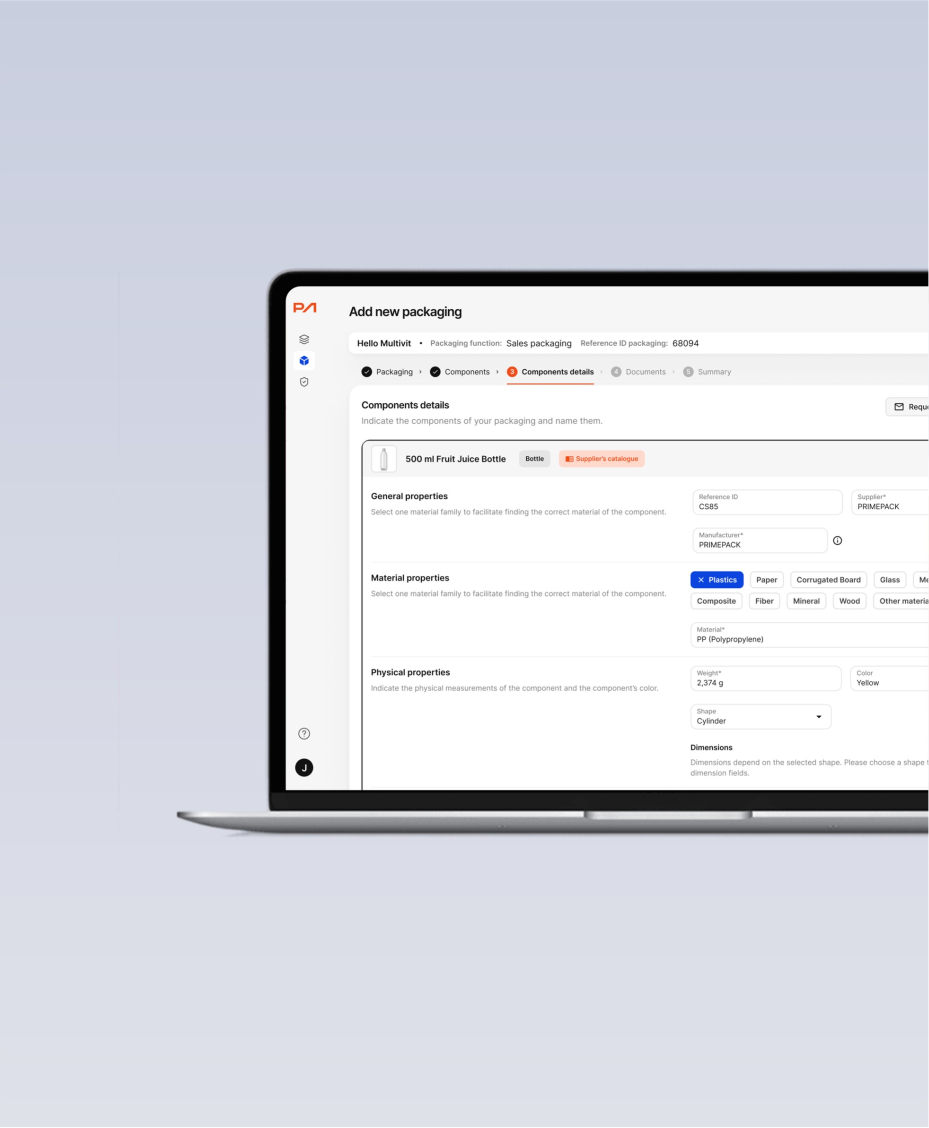
PAQR AI supports you in mapping your packaging components (materials, dimensions, recyclability, substances of concern) and attaching supplier documents and certificates. Then PAQR generates a Declaration of Conformity based on the data you’ve collected.If you’re missing data from a supplier, PAQR lets you send a structured request directly through the platform.
Your supplier receives a clear list of what’s needed, fills it out in a standardized format, and the data maps directly to your component. If your supplier is listed in PAQR’s supplier catalog, their component data imports automatically. No manual entry required.
PAQR also identifies which EU legislation and standards apply to your packaging based on its material, use, and category, and flags where your documentation is incomplete.
PAQR is designed for any business that places packaged goods on the EU market and needs to manage packaging compliance data.
Small businesses and solo operators. If you sell packaged goods but don’t have a packaging department, PAQR guides you through the process of mapping your components, collecting supplier data, and generating a Declaration of Conformity.
Mid-market brands and packaging specialists. If you manage dozens of packaging components across multiple suppliers and need a central system that replaces spreadsheets, PAQR provides a structured workspace your whole team can rely on.
Enterprise compliance teams. If you manage 100+ packaging components across multiple brands, locations, or business units, PAQR supports multi-organization setups and scales with your portfolio.
Packaging suppliers. If you manufacture packaging components and receive repeated data requests from your customers, you can list your catalog on PAQR. Your customers import your data automatically instead of emailing you for every request.
You can technically manage PPWR compliance with spreadsheets and word processors. Many businesses start this way. The question is whether that approach scales and survives over time.
Three things make dedicated software worth considering:
Retention requirements. Your documentation must be retrievable for 5 to 10 years. Spreadsheets saved in shared drives, email attachments, and personal folders tend to get lost as people leave, systems change, and files are reorganized.
Supplier data collection. If you have 10 or more packaging suppliers, collecting and organizing their data through email is time-consuming and error-prone. A structured request and response system reduces the back-and-forth significantly.
Ongoing maintenance. A Declaration of Conformity must reflect the current state of your packaging. When a supplier changes a material or you launch a new product, the documentation needs to be updated and a new DoC generated. In a spreadsheet, this means manually tracking which files are current and which are outdated. In a dedicated system, your data is structured and versioned in one place.
Speed. Generating a Declaration of Conformity from structured data takes minutes. Assembling the same document from scattered files and emails takes hours or days.
Accuracy. Structured data entry reduces the errors that come from copying between spreadsheets, misreading PDF specifications, and working from outdated files.
Traceability. A dedicated system maintains a record of every data point, every supplier submission, and every document version. When an auditor asks where a specific number came from, you have the answer.
Supplier coordination. Instead of drafting individual emails to each supplier requesting different data points, you send a standardized request and receive structured data back.
Scalability. Adding a new product line, expanding to a new market, or onboarding a new team member is significantly faster when packaging data is centralized rather than distributed across personal files.
PAQR utilizes a flexible, tiered pricing model designed to scale with businesses of all sizes, from global corporations to local startups.
Our pricing philosophy centers on inclusive accessibility, featuring specific tiers for micro-enterprises that provide essential tools for PPWR adherence at an affordable rate. The platform scales for larger organizations to manage high-volume data exchange and complex supply chains efficiently.
Investing in PAQR enhances operational efficiency by consolidating data into a single app, reducing manual effort and avoiding the high costs of non-compliance and fragmented strategies.
Flexible plans ensure businesses remain audit-ready and future-proof without compromising their bottom line.
PAQR offers consulting services focused on the data management side of packaging compliance. This includes support with recyclability assessments, EPR declarations, and the preparation of mandatory technical documentation.
These services are specifically tailored for companies based outside the EU, across the Americas and Asia, that need to meet EU packaging requirements to access the European market.
For details on consulting availability and pricing, contact the PAQR team directly.
Frequently
Asked Questions
The Packaging and Packaging Waste Regulation (PPWR) is an EU regulation that replaces the previous Packaging Directive with one set of rules applied directly across all 27 Member States.
Its goal is to reduce packaging waste through mandatory requirements covering recyclability, recycled content, chemical safety, reuse, minimization and labelling. Unlike the previous Directive, which was implemented differently in each country, the PPWR applies uniformly across the EU.
The first major deadline is August 12, 2026. From that date, businesses placing packaging on the EU market must have a Declaration of Conformity and supporting technical documentation in place. New PFAS restrictions for food-contact packaging also take effect on this date.
Additional milestones follow through 2030 (recyclability grades, recycled content targets), 2035 (at-scale recyclability proof), and 2040 (higher targets). The regulation is structured as a phased rollout, not a single deadline.
The PPWR applies to businesses that place packaging on the EU market, regardless of company size. This includes manufacturers, importers, distributors, and brand owners.
There are specific exemptions, including certain medical device packaging. But the general rule is broad: if you sell packaged goods in the EU, you are likely in scope.
Businesses based outside the EU are also affected if they export packaged products into the EU market. In this case, the EU-based importer carries the compliance obligations.
The “manufacturer” is the economic operator legally responsible for ensuring that the packaging complies with all sustainability and labelling requirements (such as recyclability, minimisation, and limits on substances of concern) before it is placed on the EU market.
You are considered the manufacturer if the packaging or packaged product is designed or manufactured under your own name or trademark, even if a third party physically produces it.
Furthermore, if you are an importer or distributor who modifies packaging in a way that affects compliance, or if you place it on the market under your own brand, the regulation also treats you as the manufacturer.
For micro-enterprises, however, the supplier may take on the manufacturer role, provided both parties are located in the same Member State.
Under the PPWR, the “producer” is the entity legally responsible for Extended Producer Responsibility (EPR) obligations, meaning they must register and finance the collection and recycling of packaging waste.
Unlike the manufacturer role, being a producer is strictly territorial.
You are considered the producer if you are the manufacturer, importer, or distributor who makes packaging or packaged goods available for the first time within the territory of a specific EU Member State.
For example, if you import packaged goods from outside the EU or from another Member State and are the first to supply them in that specific country, you assume the producer’s legal duties there.
You are also considered the producer if you unpack packaged products without being the final end user.
Yes. The PPWR covers all packaging placed on the EU market, including transport packaging, grouped packaging, and industrial packaging used exclusively in B2B contexts.
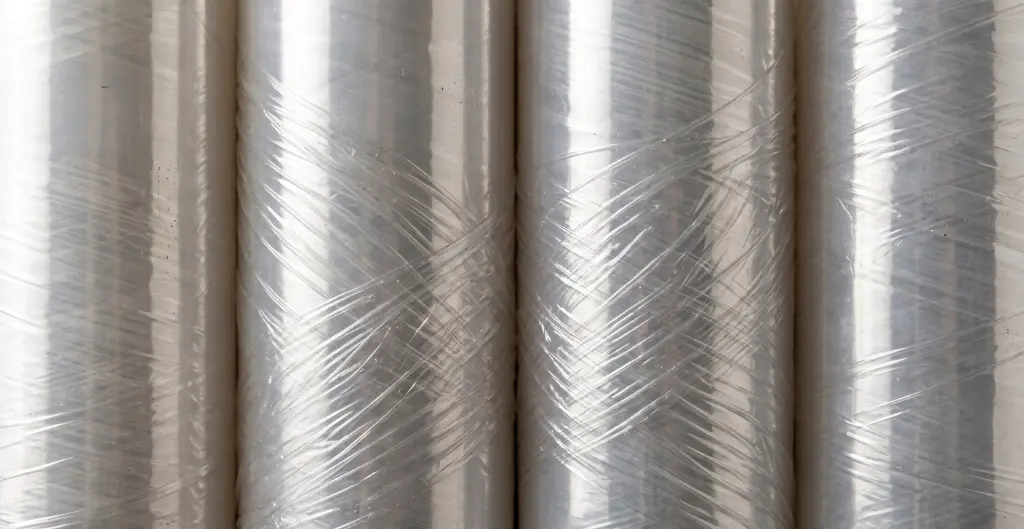
This means pallets, crates, drums, shrink wrap, and other logistics packaging are in scope.
Transport packaging has its own set of reuse targets: 40% reusable by 2030, 70% by 2040. Transport packaging used between sites of the same company or within a single Member State must be 100% reusable, with some easing recently enacted by the EU Commission.
The regulation introduces requirements across several areas:
Chemical safety. PFAS restrictions for food-contact packaging from August 2026. Heavy metals (lead, cadmium, mercury, hexavalent chromium) capped at 100 mg/kg.
Recyclability. By 2030, packaging must achieve a Recyclability Performance Grade of A, B, or C. Anything below C is banned. By 2038, only A and B are allowed.
Recycled content. Mandatory minimums for post-consumer recycled plastic from January 2030: 30% for contact-sensitive PET, 10% for non-PET contact-sensitive, 30% for single-use beverage bottles, 35% for other plastic packaging.
Minimization. Packaging weight and volume must be the minimum necessary. Empty space in transport and e-commerce packaging is capped at 50%.
Reuse. Targets for reusable packaging across transport, beverages, and HORECA sectors, starting 2027-2030.
Labelling. Harmonised pictogram labels by August 2028. QR codes on reusable packaging by February 2029.
Documentation. Declaration of Conformity required before placing packaging on the market. Technical documentation retained for 5 years (single-use) or 10 years (reusable).
From August 12, 2026, food-contact packaging cannot exceed 25 ppb for specific targeted PFAS, 250 ppb for the sum of PFAS, or 50 ppm for total PFASs. If total fluorine exceeds 50 mg/kg, the business must demonstrate the fluorine does not originate from PFAS.
PFAS (per- and polyfluoroalkyl substances) are sometimes called “forever chemicals” because they do not break down in the environment. They are commonly found in coatings, inks, and treated paper used in food packaging.
There is no transitional period for this restriction. Packaging produced after August 12, 2026 must comply. Existing stock already on the market before the deadline is exempt, but new production and new placements must meet the thresholds from day one.
The German Packaging Act (Verpackungsgesetz, VerpackG) is a national law that has governed packaging obligations in Germany. It obliges producers to participate in a Producer Responsibility Organization (PRO, “Dual System”) , register with a Central Packaging Registry (ZSVR/LUCID), and produce regular reporting.
In contrast, the PPWR is an EU-wide regulation that applies directly in all Member States, including Germany. It does not fully replace the VerpackG but introduces a new layer of requirements on top of it.
Key differences: the VerpackG focuses primarily on producer registration and affiliation with PROs within Germany. The PPWR adds EU-wide requirements for recyclability grading, recycled content, chemical restrictions, packaging minimization, conformity assessments, and Declarations of Conformity. German businesses must comply with both. In areas where the PPWR and VerpackG overlap (such as EPR obligations), the PPWR will gradually supersede national rules.
To ensure this transition is legally sound, Germany is currently in the legislative process to replace the Packaging Act (VerpackG) with a Packaging Law Implementation Act (Verpackungsrecht-Durchführungsgesetz, VerpackDG). This new national law serves as the ‘Operating Manual,’ utilizing the PPWR’s national leeway to maintain the ZSVR/LUCID, mandate the German language for compliance docs, and preserve the established PRO setup in Germany.
The EU Digital Product Passport (DPP) is a broader initiative under the Ecodesign for Sustainable Products Regulation (ESPR) that will require products sold in the EU to carry a digital record of their environmental and compliance data.
The PPWR’s labelling requirements, particularly the QR codes required on reusable packaging by February 2029, are designed to align with the DPP framework. The data you collect for PPWR compliance (material composition, recyclability, recycled content, chemical safety) is the same data the DPP will eventually require.
Businesses that build structured packaging data systems now for PPWR are building the foundation for DPP compliance later.
Before placing packaging on the EU market, you must:
Perform a conformity assessment. This evaluates whether your packaging meets the applicable PPWR requirements based on its material, format, and intended use.
Compile technical documentation. This includes material composition data, recyclability information, PFAS and heavy metal test results or declarations, supplier certifications, and any other evidence supporting your conformity assessment.
Issue a Declaration of Conformity (DoC). This is the formal document confirming that your packaging meets the applicable requirements. It must be based on the evidence in your technical documentation.
Retain records. Technical documentation and the DoC must be kept for 5 years from the date of placing single-use packaging on the market, or 10 years for reusable packaging. These records must be available to market surveillance authorities on request.
The PPWR is enforced by national market surveillance authorities in each Member State. Consequences vary by country but can include:
Market access restrictions. Non-compliant packaging can be prohibited from being placed on the EU market. This means shipments can be blocked at borders or products pulled from shelves. Financial penalties. Member States are required to establish penalty frameworks that are “effective, proportionate, and dissuasive.” Specific fine amounts will be defined at the national level.
Product recalls. If non-compliance is identified after packaging is already on the market, authorities can require corrective action, including recalls.
Reputational risk. Retailers and large buyers are increasingly requiring PPWR compliance documentation from their suppliers. Inability to provide it can result in lost contracts and exclusion from supply chains.
If a Declaration of Conformity (DoC) is missing or incomplete, the packaging is technically non-compliant and should not be placed on the EU market.
In practice, this means market surveillance authorities can request your DoC at any point. If you cannot produce it, or if it lacks the required supporting documentation, you face the enforcement consequences described above.
Importers carry a specific obligation here: they must verify that the manufacturer has completed the conformity assessment and can provide the DoC before the goods clear customs. An importer who brings non-compliant packaging into the EU assumes the legal liability.
For businesses that already have packaging on the market without a DoC, the priority is to begin the conformity assessment process now. Retroactively building documentation is significantly more difficult than creating it alongside the process.
PAQR is a packaging data platform that centralizes the information you need for PPWR compliance in one workspace.
PAQR AI supports you in mapping your packaging components (materials, dimensions, recyclability, substances of concern) and attaching supplier documents and certificates. Then PAQR generates a Declaration of Conformity based on the data you’ve collected.If you’re missing data from a supplier, PAQR lets you send a structured request directly through the platform.
Your supplier receives a clear list of what’s needed, fills it out in a standardized format, and the data maps directly to your component. If your supplier is listed in PAQR’s supplier catalog, their component data imports automatically. No manual entry required.
PAQR also identifies which EU legislation and standards apply to your packaging based on its material, use, and category, and flags where your documentation is incomplete.
PAQR is designed for any business that places packaged goods on the EU market and needs to manage packaging compliance data.
Small businesses and solo operators. If you sell packaged goods but don’t have a packaging department, PAQR guides you through the process of mapping your components, collecting supplier data, and generating a Declaration of Conformity.
Mid-market brands and packaging specialists. If you manage dozens of packaging components across multiple suppliers and need a central system that replaces spreadsheets, PAQR provides a structured workspace your whole team can rely on.
Enterprise compliance teams. If you manage 100+ packaging components across multiple brands, locations, or business units, PAQR supports multi-organization setups and scales with your portfolio.
Packaging suppliers. If you manufacture packaging components and receive repeated data requests from your customers, you can list your catalog on PAQR. Your customers import your data automatically instead of emailing you for every request.
You can technically manage PPWR compliance with spreadsheets and word processors. Many businesses start this way. The question is whether that approach scales and survives over time.
Three things make dedicated software worth considering:
Retention requirements. Your documentation must be retrievable for 5 to 10 years. Spreadsheets saved in shared drives, email attachments, and personal folders tend to get lost as people leave, systems change, and files are reorganized.
Supplier data collection. If you have 10 or more packaging suppliers, collecting and organizing their data through email is time-consuming and error-prone. A structured request and response system reduces the back-and-forth significantly.
Ongoing maintenance. A Declaration of Conformity must reflect the current state of your packaging. When a supplier changes a material or you launch a new product, the documentation needs to be updated and a new DoC generated. In a spreadsheet, this means manually tracking which files are current and which are outdated. In a dedicated system, your data is structured and versioned in one place.
Speed. Generating a Declaration of Conformity from structured data takes minutes. Assembling the same document from scattered files and emails takes hours or days.
Accuracy. Structured data entry reduces the errors that come from copying between spreadsheets, misreading PDF specifications, and working from outdated files.
Traceability. A dedicated system maintains a record of every data point, every supplier submission, and every document version. When an auditor asks where a specific number came from, you have the answer.
Supplier coordination. Instead of drafting individual emails to each supplier requesting different data points, you send a standardized request and receive structured data back.
Scalability. Adding a new product line, expanding to a new market, or onboarding a new team member is significantly faster when packaging data is centralized rather than distributed across personal files.
PAQR utilizes a flexible, tiered pricing model designed to scale with businesses of all sizes, from global corporations to local startups.
Our pricing philosophy centers on inclusive accessibility, featuring specific tiers for micro-enterprises that provide essential tools for PPWR adherence at an affordable rate. The platform scales for larger organizations to manage high-volume data exchange and complex supply chains efficiently.
Investing in PAQR enhances operational efficiency by consolidating data into a single app, reducing manual effort and avoiding the high costs of non-compliance and fragmented strategies.
Flexible plans ensure businesses remain audit-ready and future-proof without compromising their bottom line.
PAQR offers consulting services focused on the data management side of packaging compliance. This includes support with recyclability assessments, EPR declarations, and the preparation of mandatory technical documentation.
These services are specifically tailored for companies based outside the EU, across the Americas and Asia, that need to meet EU packaging requirements to access the European market.
For details on consulting availability and pricing, contact the PAQR team directly.
Frequently
Asked Questions
The Packaging and Packaging Waste Regulation (PPWR) is an EU regulation that replaces the previous Packaging Directive with one set of rules applied directly across all 27 Member States.
Its goal is to reduce packaging waste through mandatory requirements covering recyclability, recycled content, chemical safety, reuse, minimization and labelling. Unlike the previous Directive, which was implemented differently in each country, the PPWR applies uniformly across the EU.
The first major deadline is August 12, 2026. From that date, businesses placing packaging on the EU market must have a Declaration of Conformity and supporting technical documentation in place. New PFAS restrictions for food-contact packaging also take effect on this date.
Additional milestones follow through 2030 (recyclability grades, recycled content targets), 2035 (at-scale recyclability proof), and 2040 (higher targets). The regulation is structured as a phased rollout, not a single deadline.
The PPWR applies to businesses that place packaging on the EU market, regardless of company size. This includes manufacturers, importers, distributors, and brand owners.
There are specific exemptions, including certain medical device packaging. But the general rule is broad: if you sell packaged goods in the EU, you are likely in scope.
Businesses based outside the EU are also affected if they export packaged products into the EU market. In this case, the EU-based importer carries the compliance obligations.
The “manufacturer” is the economic operator legally responsible for ensuring that the packaging complies with all sustainability and labelling requirements (such as recyclability, minimisation, and limits on substances of concern) before it is placed on the EU market.
You are considered the manufacturer if the packaging or packaged product is designed or manufactured under your own name or trademark, even if a third party physically produces it.
Furthermore, if you are an importer or distributor who modifies packaging in a way that affects compliance, or if you place it on the market under your own brand, the regulation also treats you as the manufacturer.
For micro-enterprises, however, the supplier may take on the manufacturer role, provided both parties are located in the same Member State.
Under the PPWR, the “producer” is the entity legally responsible for Extended Producer Responsibility (EPR) obligations, meaning they must register and finance the collection and recycling of packaging waste.
Unlike the manufacturer role, being a producer is strictly territorial.
You are considered the producer if you are the manufacturer, importer, or distributor who makes packaging or packaged goods available for the first time within the territory of a specific EU Member State.
For example, if you import packaged goods from outside the EU or from another Member State and are the first to supply them in that specific country, you assume the producer’s legal duties there.
You are also considered the producer if you unpack packaged products without being the final end user.
Yes. The PPWR covers all packaging placed on the EU market, including transport packaging, grouped packaging, and industrial packaging used exclusively in B2B contexts.
This means pallets, crates, drums, shrink wrap, and other logistics packaging are in scope.
Transport packaging has its own set of reuse targets: 40% reusable by 2030, 70% by 2040. Transport packaging used between sites of the same company or within a single Member State must be 100% reusable, with some easing recently enacted by the EU Commission.
The regulation introduces requirements across several areas:
Chemical safety. PFAS restrictions for food-contact packaging from August 2026. Heavy metals (lead, cadmium, mercury, hexavalent chromium) capped at 100 mg/kg.
Recyclability. By 2030, packaging must achieve a Recyclability Performance Grade of A, B, or C. Anything below C is banned. By 2038, only A and B are allowed.
Recycled content. Mandatory minimums for post-consumer recycled plastic from January 2030: 30% for contact-sensitive PET, 10% for non-PET contact-sensitive, 30% for single-use beverage bottles, 35% for other plastic packaging.
Minimization. Packaging weight and volume must be the minimum necessary. Empty space in transport and e-commerce packaging is capped at 50%.
Reuse. Targets for reusable packaging across transport, beverages, and HORECA sectors, starting 2027-2030.
Labelling. Harmonised pictogram labels by August 2028. QR codes on reusable packaging by February 2029.
Documentation. Declaration of Conformity required before placing packaging on the market. Technical documentation retained for 5 years (single-use) or 10 years (reusable).
From August 12, 2026, food-contact packaging cannot exceed 25 ppb for specific targeted PFAS, 250 ppb for the sum of PFAS, or 50 ppm for total PFASs. If total fluorine exceeds 50 mg/kg, the business must demonstrate the fluorine does not originate from PFAS.
PFAS (per- and polyfluoroalkyl substances) are sometimes called “forever chemicals” because they do not break down in the environment. They are commonly found in coatings, inks, and treated paper used in food packaging.
There is no transitional period for this restriction. Packaging produced after August 12, 2026 must comply. Existing stock already on the market before the deadline is exempt, but new production and new placements must meet the thresholds from day one.
The German Packaging Act (Verpackungsgesetz, VerpackG) is a national law that has governed packaging obligations in Germany. It obliges producers to participate in a Producer Responsibility Organization (PRO, “Dual System”) , register with a Central Packaging Registry (ZSVR/LUCID), and produce regular reporting.
In contrast, the PPWR is an EU-wide regulation that applies directly in all Member States, including Germany. It does not fully replace the VerpackG but introduces a new layer of requirements on top of it.
Key differences: the VerpackG focuses primarily on producer registration and affiliation with PROs within Germany. The PPWR adds EU-wide requirements for recyclability grading, recycled content, chemical restrictions, packaging minimization, conformity assessments, and Declarations of Conformity. German businesses must comply with both. In areas where the PPWR and VerpackG overlap (such as EPR obligations), the PPWR will gradually supersede national rules.
To ensure this transition is legally sound, Germany is currently in the legislative process to replace the Packaging Act (VerpackG) with a Packaging Law Implementation Act (Verpackungsrecht-Durchführungsgesetz, VerpackDG). This new national law serves as the ‘Operating Manual,’ utilizing the PPWR’s national leeway to maintain the ZSVR/LUCID, mandate the German language for compliance docs, and preserve the established PRO setup in Germany.
The EU Digital Product Passport (DPP) is a broader initiative under the Ecodesign for Sustainable Products Regulation (ESPR) that will require products sold in the EU to carry a digital record of their environmental and compliance data.
The PPWR’s labelling requirements, particularly the QR codes required on reusable packaging by February 2029, are designed to align with the DPP framework. The data you collect for PPWR compliance (material composition, recyclability, recycled content, chemical safety) is the same data the DPP will eventually require.
Businesses that build structured packaging data systems now for PPWR are building the foundation for DPP compliance later.
Before placing packaging on the EU market, you must:
Perform a conformity assessment. This evaluates whether your packaging meets the applicable PPWR requirements based on its material, format, and intended use.
Compile technical documentation. This includes material composition data, recyclability information, PFAS and heavy metal test results or declarations, supplier certifications, and any other evidence supporting your conformity assessment.
Issue a Declaration of Conformity (DoC). This is the formal document confirming that your packaging meets the applicable requirements. It must be based on the evidence in your technical documentation.
Retain records. Technical documentation and the DoC must be kept for 5 years from the date of placing single-use packaging on the market, or 10 years for reusable packaging. These records must be available to market surveillance authorities on request.
The PPWR is enforced by national market surveillance authorities in each Member State. Consequences vary by country but can include:
Market access restrictions. Non-compliant packaging can be prohibited from being placed on the EU market. This means shipments can be blocked at borders or products pulled from shelves. Financial penalties. Member States are required to establish penalty frameworks that are “effective, proportionate, and dissuasive.” Specific fine amounts will be defined at the national level.
Product recalls. If non-compliance is identified after packaging is already on the market, authorities can require corrective action, including recalls.
Reputational risk. Retailers and large buyers are increasingly requiring PPWR compliance documentation from their suppliers. Inability to provide it can result in lost contracts and exclusion from supply chains.
If a Declaration of Conformity (DoC) is missing or incomplete, the packaging is technically non-compliant and should not be placed on the EU market.
In practice, this means market surveillance authorities can request your DoC at any point. If you cannot produce it, or if it lacks the required supporting documentation, you face the enforcement consequences described above.
Importers carry a specific obligation here: they must verify that the manufacturer has completed the conformity assessment and can provide the DoC before the goods clear customs. An importer who brings non-compliant packaging into the EU assumes the legal liability.
For businesses that already have packaging on the market without a DoC, the priority is to begin the conformity assessment process now. Retroactively building documentation is significantly more difficult than creating it alongside the process.
PAQR is a packaging data platform that centralizes the information you need for PPWR compliance in one workspace.
PAQR AI supports you in mapping your packaging components (materials, dimensions, recyclability, substances of concern) and attaching supplier documents and certificates. Then PAQR generates a Declaration of Conformity based on the data you’ve collected.If you’re missing data from a supplier, PAQR lets you send a structured request directly through the platform.
Your supplier receives a clear list of what’s needed, fills it out in a standardized format, and the data maps directly to your component. If your supplier is listed in PAQR’s supplier catalog, their component data imports automatically. No manual entry required.
PAQR also identifies which EU legislation and standards apply to your packaging based on its material, use, and category, and flags where your documentation is incomplete.
PAQR is designed for any business that places packaged goods on the EU market and needs to manage packaging compliance data.
Small businesses and solo operators. If you sell packaged goods but don’t have a packaging department, PAQR guides you through the process of mapping your components, collecting supplier data, and generating a Declaration of Conformity.
Mid-market brands and packaging specialists. If you manage dozens of packaging components across multiple suppliers and need a central system that replaces spreadsheets, PAQR provides a structured workspace your whole team can rely on.
Enterprise compliance teams. If you manage 100+ packaging components across multiple brands, locations, or business units, PAQR supports multi-organization setups and scales with your portfolio.
Packaging suppliers. If you manufacture packaging components and receive repeated data requests from your customers, you can list your catalog on PAQR. Your customers import your data automatically instead of emailing you for every request.
You can technically manage PPWR compliance with spreadsheets and word processors. Many businesses start this way. The question is whether that approach scales and survives over time.
Three things make dedicated software worth considering:
Retention requirements. Your documentation must be retrievable for 5 to 10 years. Spreadsheets saved in shared drives, email attachments, and personal folders tend to get lost as people leave, systems change, and files are reorganized.
Supplier data collection. If you have 10 or more packaging suppliers, collecting and organizing their data through email is time-consuming and error-prone. A structured request and response system reduces the back-and-forth significantly.
Ongoing maintenance. A Declaration of Conformity must reflect the current state of your packaging. When a supplier changes a material or you launch a new product, the documentation needs to be updated and a new DoC generated. In a spreadsheet, this means manually tracking which files are current and which are outdated. In a dedicated system, your data is structured and versioned in one place.
Speed. Generating a Declaration of Conformity from structured data takes minutes. Assembling the same document from scattered files and emails takes hours or days.
Accuracy. Structured data entry reduces the errors that come from copying between spreadsheets, misreading PDF specifications, and working from outdated files.
Traceability. A dedicated system maintains a record of every data point, every supplier submission, and every document version. When an auditor asks where a specific number came from, you have the answer.
Supplier coordination. Instead of drafting individual emails to each supplier requesting different data points, you send a standardized request and receive structured data back.
Scalability. Adding a new product line, expanding to a new market, or onboarding a new team member is significantly faster when packaging data is centralized rather than distributed across personal files.
PAQR utilizes a flexible, tiered pricing model designed to scale with businesses of all sizes, from global corporations to local startups.
Our pricing philosophy centers on inclusive accessibility, featuring specific tiers for micro-enterprises that provide essential tools for PPWR adherence at an affordable rate. The platform scales for larger organizations to manage high-volume data exchange and complex supply chains efficiently.
Investing in PAQR enhances operational efficiency by consolidating data into a single app, reducing manual effort and avoiding the high costs of non-compliance and fragmented strategies.
Flexible plans ensure businesses remain audit-ready and future-proof without compromising their bottom line.
PAQR offers consulting services focused on the data management side of packaging compliance. This includes support with recyclability assessments, EPR declarations, and the preparation of mandatory technical documentation.
These services are specifically tailored for companies based outside the EU, across the Americas and Asia, that need to meet EU packaging requirements to access the European market.
For details on consulting availability and pricing, contact the PAQR team directly.
Packaging Industry Insights
Deep dives into the fields of packaging compliance and
data management best practices.
-

PPWR B2B Packaging: Does it Apply, and What Changes?
Read more >>: PPWR B2B Packaging: Does it Apply, and What Changes?Does PPWR apply to B2B packaging? Yes, with no general exemption, but several specific rules change, including a 100% reuse mandate.
-

PPWR Declaration of Conformity: The Complete Guide
Read more >>: PPWR Declaration of Conformity: The Complete GuideWhat must a PPWR Declaration of Conformity contain, who signs it, and how long do you keep it? A complete guide to the Annex VIII structure, with a worked example.
-

PPWR Supplier Obligations: Understanding Article 16 Requirements
Read more >>: PPWR Supplier Obligations: Understanding Article 16 RequirementsArticle 16 PPWR puts the burden of proof on suppliers, not just manufacturers. Here is what suppliers are legally required to hand over, what manufacturers should be asking for, and where the line of accountability actually sits
-

PPWR Role Determination: Which Economic Operator Are You?
Read more >>: PPWR Role Determination: Which Economic Operator Are You?Your PPWR role, manufacturer, importer, distributor, or producer, is not fixed to your company. It is determined packaging by packaging, and it decides who signs the Declaration of Conformity, who registers for EPR, and who carries the legal exposure if something goes wrong.
-
PPWR and VerpV: How EU and Swiss Packaging Rules Compare
Read more >>: PPWR and VerpV: How EU and Swiss Packaging Rules ComparePPWR and VerpV both aim to cut packaging waste, but the EU and Switzerland use very different tools to get there. Here’s what general management needs to track across both frameworks.
-

PPWR Importer Obligations: What You Need to Know
Read more >>: PPWR Importer Obligations: What You Need to KnowUnder PPWR, importers are not passive recipients of compliant packaging. They are legal gatekeepers, verifying, documenting, and answering for what crosses the EU border. Here is the full breakdown of PPWR importer obligations.
Packaging Industry Insights
Deep dives into the fields of packaging compliance and
data management best practices.
-
PPWR B2B Packaging: Does it Apply, and What Changes?
Read more >>: PPWR B2B Packaging: Does it Apply, and What Changes?Does PPWR apply to B2B packaging? Yes, with no general exemption, but several specific rules change, including a 100% reuse mandate.
-
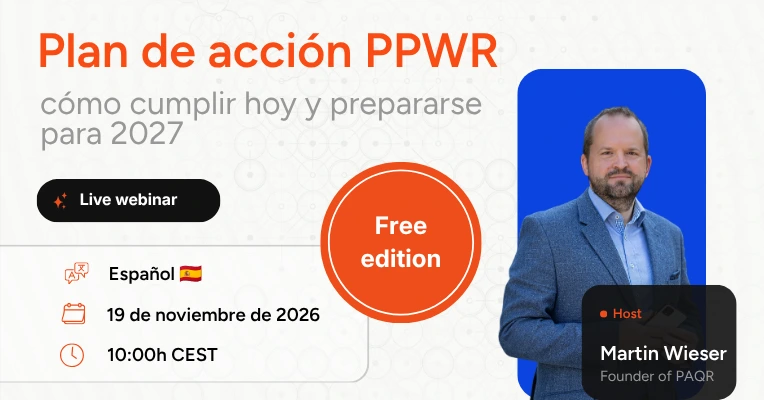
November 19, 2026 – 10am CEST
Plan de acción PPWR: cómo cumplir hoy y prepararse para 2027Read more >>: November 19, 2026 – 10am CESTPPWR has applied since August 12, and national market surveillance authorities are now actively enforcing compliance. This session, held in 🇪🇸Spanish, reviews the requirements in force today, the implementing acts still pending, and the milestones ahead, so that you can get your portfolio compliant and stay one step ahead.
Plan de acción PPWR: cómo cumplir hoy y prepararse para 2027 -
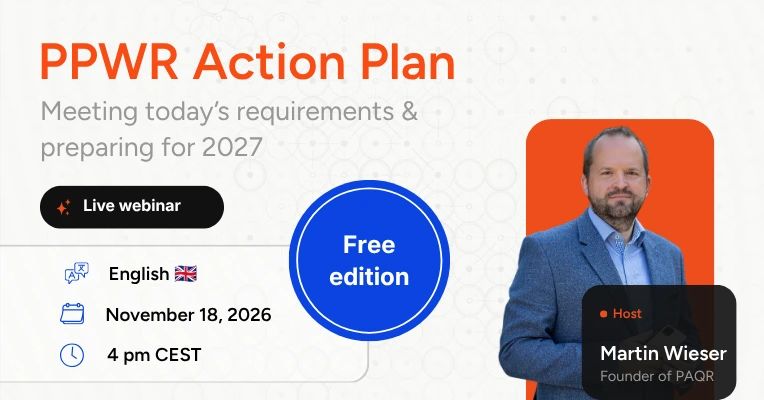
November 18, 2026 – 4pm CEST
PPWR Action Plan: Meeting today’s requirements & preparing for 2027Read more >>: November 18, 2026 – 4pm CESTPPWR has applied since August 12, and national market surveillance authorities are now actively enforcing compliance. This session, held in 🇬🇧 English, reviews the requirements in force today, the implementing acts still pending, and the milestones ahead, so that you can get your portfolio compliant and stay one step ahead.
PPWR Action Plan: Meeting today’s requirements & preparing for 2027 -
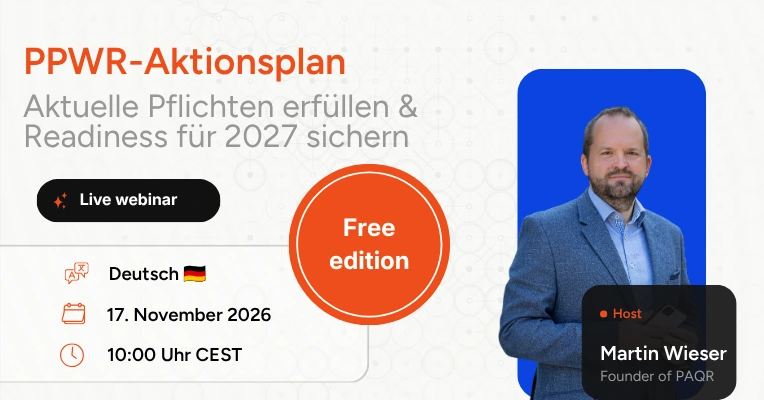
November 17, 2026 – 10am CEST
PPWR-Aktionsplan: Aktuelle Pflichten erfüllen & Readiness für 2027 sichernRead more >>: November 17, 2026 – 10am CESTPPWR has applied since August 12, and national market surveillance authorities are now actively enforcing compliance. This session, held in 🇩🇪 German, reviews the requirements in force today, the implementing acts still pending, and the milestones ahead, so that you can get your portfolio compliant and stay one step ahead.
PPWR-Aktionsplan: Aktuelle Pflichten erfüllen & Readiness für 2027 sichern -
PPWR Declaration of Conformity: The Complete Guide
Read more >>: PPWR Declaration of Conformity: The Complete GuideWhat must a PPWR Declaration of Conformity contain, who signs it, and how long do you keep it? A complete guide to the Annex VIII structure, with a worked example.
-
PPWR Supplier Obligations: Understanding Article 16 Requirements
Read more >>: PPWR Supplier Obligations: Understanding Article 16 RequirementsArticle 16 PPWR puts the burden of proof on suppliers, not just manufacturers. Here is what suppliers are legally required to hand over, what manufacturers should be asking for, and where the line of accountability actually sits
Packaging Industry Insights
Deep dives into the fields of packaging compliance and
data management best practices.
-
PPWR B2B Packaging: Does it Apply, and What Changes?
Read more >>: PPWR B2B Packaging: Does it Apply, and What Changes?Does PPWR apply to B2B packaging? Yes, with no general exemption, but several specific rules change, including a 100% reuse mandate.
Ready to Future-Proof
your Packaging Data?
Book a session with our experts to see how PAQR
automates your data collection and keeps you ahead of
evolving global packaging regulations.
You are currently viewing a placeholder content from Mailjet. To access the actual content, click the button below. Please note that doing so will share data with third-party providers.
More InformationReady to Future-Proof
your Packaging Data?
Book a session with our experts to see how PAQR
automates your data collection and keeps you ahead of
evolving global packaging regulations.
You are currently viewing a placeholder content from Mailjet. To access the actual content, click the button below. Please note that doing so will share data with third-party providers.
More InformationReady to Future-Proof
your Packaging Data?
Book a session with our experts to see how PAQR
automates your data collection and keeps you ahead of
evolving global packaging regulations.
You are currently viewing a placeholder content from Mailjet. To access the actual content, click the button below. Please note that doing so will share data with third-party providers.
More Information